
Degraded land is not fixed by picking a treatment. First you need to know what can be reversed, over what timescale, and what is better left alone.
Our work is to guide you through those decisions and carry out what gets decided. The groundwork — hydrology, decompaction, microbial life — is the tool, not the end.
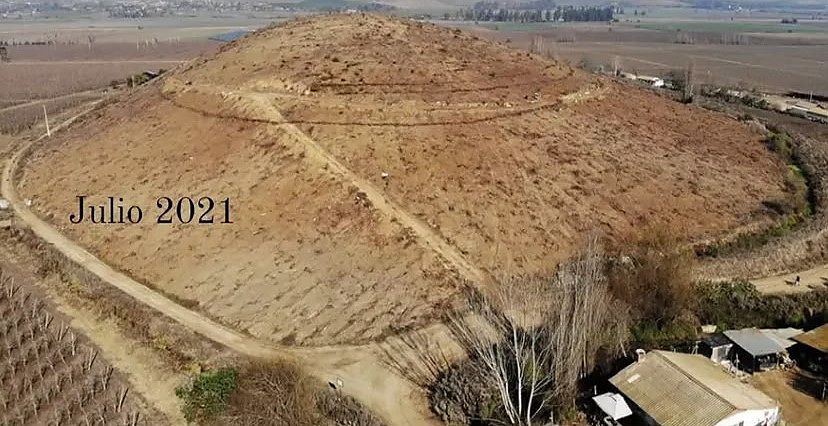
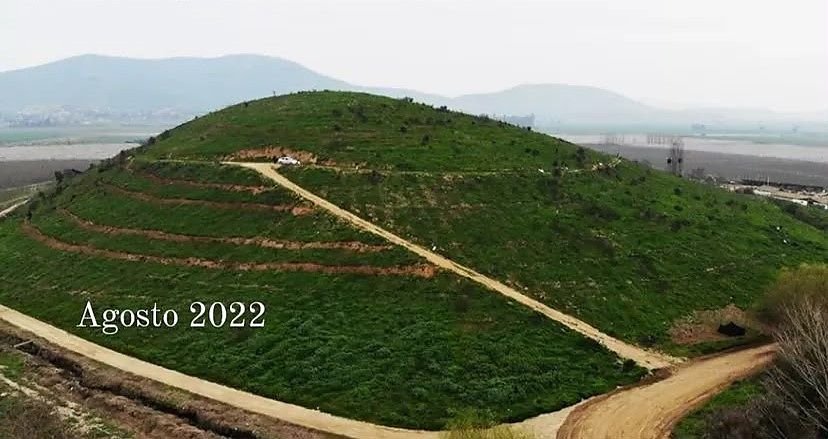
We have seen it work: on a hillside of compacted soil with no cover, thirteen months were enough for the vegetation to come back with nobody planting it.
First, knowing what can be reversed
Not all degraded land recovers, and none of it recovers the same way. Reading the property — soil, slopes, water, whatever vegetation is left — tells you what is reversible, what will take years, and what is better not touched.
That is where you get what no service catalogue will give you: the order. What comes first, what can wait, and what is wasted if it is done out of sequence.
The decisions are yours, and they arrive in stages
How much to intervene, where to start, how much ground to put into production and how much to let rebuild itself. None of those questions is purely technical: they depend on what you want the land for.
What we bring is the judgement and the consequences of each option, and we are there while the process runs — not only on the day a report is handed over.
The tools, and why they are not the starting point
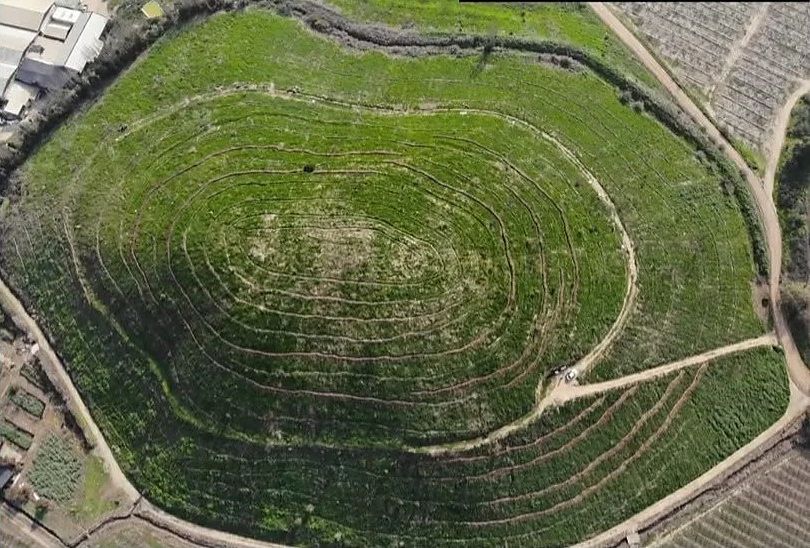
The work starts with water. Infiltration ditches cut across the slope and force the water to stop and soak in, rather than run downhill carrying material away. Decompaction opens the soil so roots have somewhere to go.
Mountain microorganisms are collected from nearby native forest and multiplied on site: they are the life the soil lost as it degraded.
This is called passive restoration: instead of planting and then sustaining what was planted, the conditions are set and the vegetation returns on its own. Where the ground allows it, it is the option that asks least of you over the years.
Conserving is part of the job too
Not everything is recovery. On almost any site there are stretches that still work — a copse, a ravine, a band of native vegetation — and there the right move is to protect them, not intervene.
And what holds the result over time is connection: if the land stays linked to the vegetation around it, that is how seed arrives and how the animals that spread it move. A restored site on its own is an island.
What is not ours to do, and worth knowing
This is measured in years, not months. Thirteen months was fast: that hillside had forest nearby and a rainy season that helped. It is not the norm.
We deliver the diagnosis, the staged plan and the work itself, and we support the decisions as the process advances. Longer-term monitoring is agreed separately, because not every property needs it the same way.
And there are sites where this is not the right answer. If the soil has lost its entire fertile horizon, or the slope is unstable, we would rather say so before starting than halfway through.
What comes next
Restoring land is rarely a standalone commission: it almost always turns up alongside other decisions about the site.
- Land survey Measuring the site before intervening: area, slopes, water and access.
- Property master planning Where each use goes, so that what gets built does not clash with what is being restored.
- Functional landscape A landscape that, as well as looking good, produces, protects and regenerates.
- Firescaping Where the property borders forest, the ground around the house is designed to slow the spread of fire.
None of it has to be decided now. But if you are going to restore a piece of land, it helps to know from the start what you intend to do with it.